

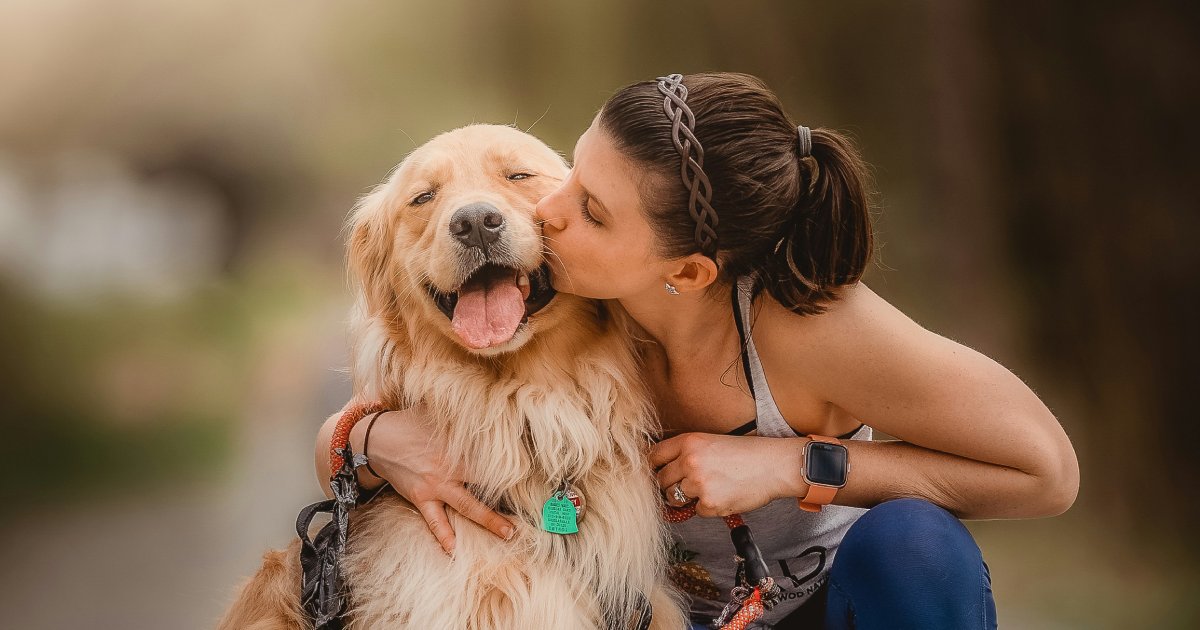

You know your dog’s favorite toy, their bedtime spot, and the exact scratch that makes their leg kick. But what about the billions of tiny organisms keeping their gut running smoothly?
Probiotics—live beneficial bacteria—are not marketing hype. They are a genuine, science-backed way to support your dog’s digestion, immunity, and overall comfort. Here is what the veterinary research actually says, in plain English.
1. They Restore Gut Balance
Your dog’s gut is home to billions of bacteria. When that balance is thrown off—by antibiotics, stress, or a sudden food switch—bad bacteria can take over. That is called dysbiosis, and it often shows up as soft stools, gas, or diarrhea.
Probiotics fight back through competitive exclusion—they physically occupy space on the gut lining, consume the nutrients bad bacteria need, and produce acids that make the environment hostile to pathogens like Salmonella and E. coli. The result? A calmer, more balanced gut.
2. They Support the Immune System
About 70% of your dog’s immune system lives in the gut, inside a network called GALT (Gut-Associated Lymphoid Tissue). Think of it as the body’s security checkpoint for everything your dog eats.
Probiotics help train this system. They boost protective antibodies like sIgA, calm unnecessary inflammation, and strengthen the gut barrier so toxins do not leak into the bloodstream. A healthier gut literally means a more resilient dog.
3. They Improve Digestive Comfort
Probiotics do more than firm up stools—though they do that too, especially after a round of antibiotics. They also reduce foul-smelling gas by cutting down on the fermentation of undigested proteins.
On the metabolic side, probiotic fermentation produces short-chain fatty acids (SCFAs) like butyrate, which feeds the cells lining the colon and helps maintain a strong gut wall. Dogs with chronic digestive issues often have lower SCFA levels—restoring them can make a real difference in day-to-day comfort.
How It Works: At a Glance
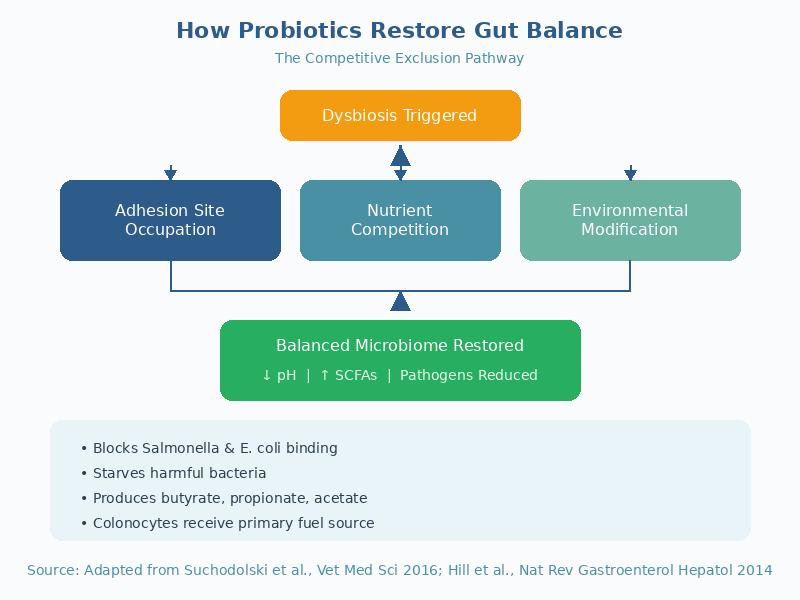
Figure 1. Three ways probiotics restore balance: blocking bad bacteria, outcompeting them for food, and acidifying the gut environment.
What the Experts Say
“Our results suggest that microbiome manipulations via probiotics may be useful in the management of gastrointestinal disorders in dogs and cats.”
— Dr. Jan S. Suchodolski, Professor & Associate Director for Research, Texas A&M GI Laboratory
“Probiotics offer many benefits to pets, ranging from reduced diarrhea to management of chronic inflammatory bowel issues. These particular biotics currently are the most researched and demonstrate some of the best health evidence.”
— Dr. Kelly S. Swanson, Professor of Nutritional Sciences, University of Illinois Urbana-Champaign, 2024 AFIA Pet Food Conference
The Bottom Line
Probiotics are not a cure-all, but the science is clear: they help crowd out harmful bacteria, support immune training in the gut, and improve everyday digestive comfort. Whether your dog is bouncing back from antibiotics or just needs a little daily gut support, probiotics are a tool worth understanding.
Disclaimer: This article is for educational purposes only and does not replace veterinary advice. Talk to your vet before starting any supplement, especially if your dog has ongoing health issues.
References
1. Hill C, et al. ISAPP consensus statement on the scope and appropriate use of the term probiotic. Nat Rev Gastroenterol Hepatol. 2014;11:506-514.
2. Suchodolski JS. Texas A&M GI Laboratory. vetmed.tamu.edu/gilab.
3. Swanson KS. Behind the Biotics Buzz. AFIA 2024 Pet Food Conference.
4. Kelley RL, et al. Clinical benefits of probiotic Bifidobacterium animalis AHC7 in acute canine diarrhea. Vet Ther. 2009;10:121-130.
5. Rossi G, et al. Effects of probiotic Slab51 in healthy dogs. Front Vet Sci. 2020;7:613.
6. White R, et al. Multi-strain probiotic in canine IBD. Gut Microbes. 2017;8:451-466.
7. Lee D, et al. Probiotics and gut microbiome in companion animals. J Anim Sci Technol. 2022;64:197-217.
8. Waltham Catalogue for the Canine Microbiome. SCFA Production. Waltham Petcare Science Institute. 2026.
9. Jergens AE, et al. Fecal SCFA and dysbiosis in dogs with chronic enteropathy. J Vet Intern Med. 2019;33:1608-1616.
10. Bastos TS, et al. Bacillus subtilis and B. licheniformis reduce fecal odor in dogs. BMC Vet Res. 2020;16:116.
11. Ziese AL, et al. Probiotic treatment in acute hemorrhagic diarrhea. PLoS ONE. 2018;13:e0204691.